Install & Dismantle: What Exhibitors Need to Know
Demystifying the I&D process — from move-in schedules and labor requirements to union rules and timeline planning for a stress-free show setup.
Ryan Mitchell
Senior Trade Show Technology Consultant
Understanding the I&D Process
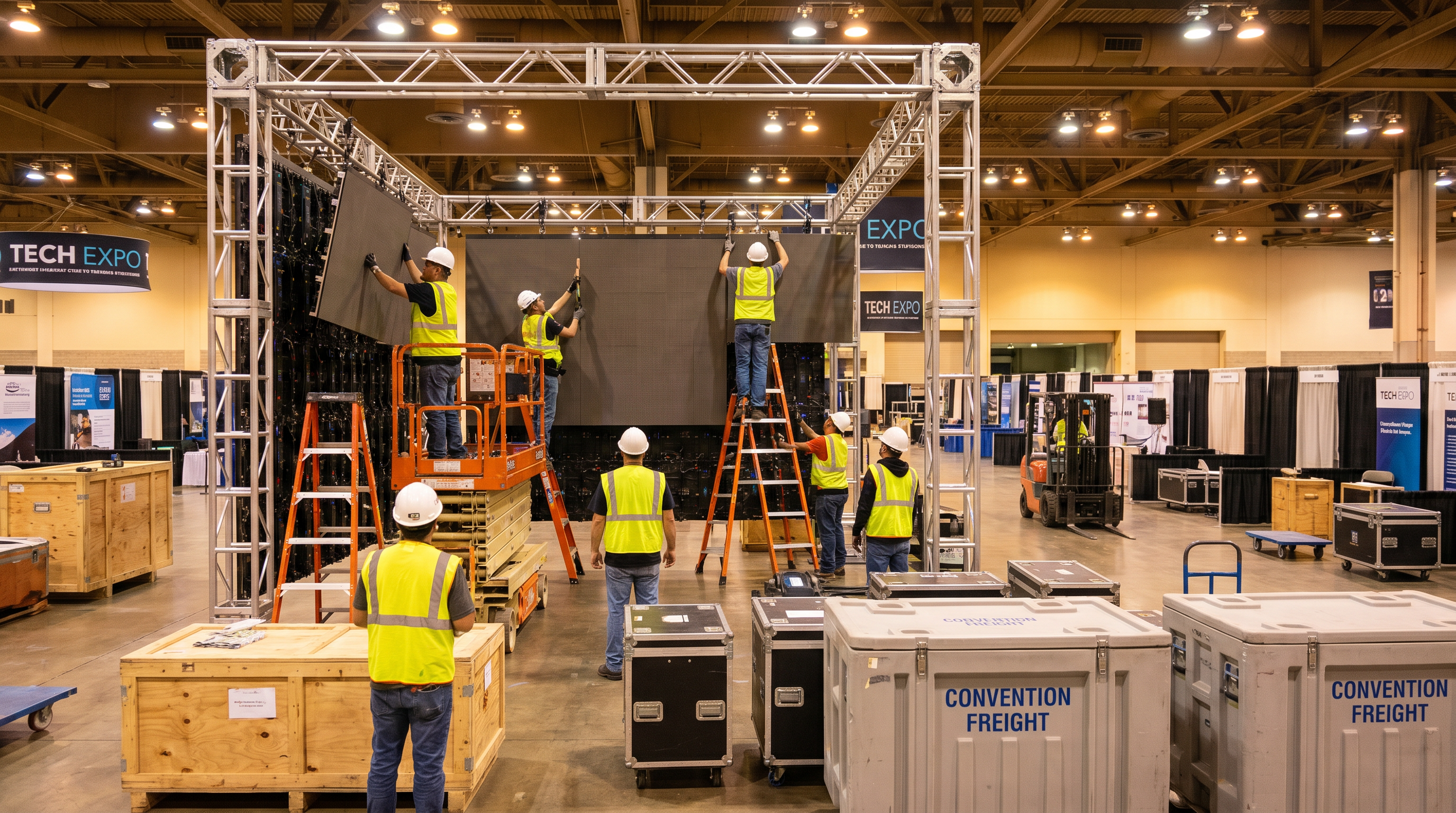
Install and Dismantle (I&D) refers to the physical setup and teardown of your trade show exhibit. For LED exhibits, this process is more technical than traditional exhibits because it involves assembling modular LED panels, connecting video processors, routing power and data cables, and calibrating the display.
Professional I&D is not optional for LED exhibits. Unlike a simple pop-up display that one person can assemble, an LED video wall requires trained technicians who understand panel alignment, signal flow, and structural safety. Most LED rental companies include I&D in their pricing — always confirm this before signing a contract.
Move-In and Move-Out Schedules
Every trade show publishes a move-in and move-out schedule that dictates when you can access the show floor. Large island exhibits (20x20 and above) typically get earlier move-in times, while smaller inline exhibits move in later. This sequencing prevents congestion and ensures large exhibits don't block access to smaller exhibits.
For LED exhibits, request the earliest possible move-in time. LED walls take 4-8 hours to install depending on size and complexity, and you'll want buffer time for content testing and troubleshooting. A 20x20 LED exhibit typically needs a full day for installation, while a 10x10 can be completed in 4-6 hours.
Union Labor Requirements
Many major convention centers in cities like Las Vegas, Chicago, Orlando, and New York require union labor for exhibit installation. This means you may need to hire union electricians, riggers, and general laborers in addition to your LED rental company's technicians.
Union labor rates vary by city and trade: electricians typically run $80-$150/hour, riggers $75-$125/hour, and general labor $50-$90/hour. Overtime rates (evenings, weekends, holidays) can be 1.5x to 2x standard rates. Factor these costs into your budget and schedule installations during straight-time hours whenever possible.
Your exhibit rental company should coordinate with the convention center's labor desk to ensure the right trades are scheduled at the right times. Miscommunication here can result in costly delays.
LED-Specific Installation Considerations
LED panels must be installed on a level, stable surface or mounting structure. Even small misalignments between panels create visible seam lines that detract from the display quality. Professional LED technicians use precision leveling tools and calibration software to ensure a seamless appearance.
Power requirements for LED walls are significant. A standard 10x8 foot wall draws 15-20 amps, while a large 20x12 foot installation might require 40-60 amps on dedicated circuits. Order electrical service well in advance and confirm that your exhibit location has adequate power capacity.
Always schedule a content test run after installation. Load your final content, check for dead pixels or color inconsistencies, and verify that the video processor is mapping correctly. It's much easier to fix issues during setup than 30 minutes before the show opens.
Dismantle: Getting Out Efficiently
Dismantle is the reverse of installation but often happens under tighter time pressure. Most shows require all exhibits to be removed within 24-48 hours of show close. LED panels must be carefully disconnected, cleaned, and packed in their road cases to prevent damage during shipping.
Coordinate with your rental company on dismantle timing. LED walls should be among the last elements removed (after furniture, products, and marketing materials) and among the first items packed for shipping. Ensure your team has removed all personal items, products, and branded materials before the I&D crew begins teardown.
Key Takeaways
- Professional I&D is mandatory for LED exhibits — never attempt DIY installation
- Plan 4-8 hours for LED wall installation depending on size
- Union labor is required at most major convention centers — budget accordingly
- Order electrical service early and confirm adequate power capacity
- Always run a full content test after installation before the show opens
Frequently Asked Questions
Is I&D included in LED exhibit rental pricing?
Most reputable LED rental companies include basic I&D in their pricing. Always confirm what's included — some may charge separately for union labor coordination, overtime, or complex rigging.
What happens if an LED panel is damaged during installation?
Professional rental companies carry spare panels on-site for exactly this situation. A damaged panel can typically be swapped in 15-30 minutes without affecting the rest of the wall.
Can I supervise the installation?
Yes, and we encourage it. Being present during installation allows you to verify content placement, check sight lines from the aisle, and make last-minute adjustments before the show opens.
Written by Ryan Mitchell
Senior Trade Show Technology Consultant
Ryan Mitchell has over 12 years of experience in trade show exhibit design and LED display technology. He has managed LED installations at 200+ major conventions including CES, NAB, HIMSS, and SEMA.
Ready to Elevate Your Trade Show Presence?
Get a free, no-obligation quote for your next LED exhibit. Our team will help you choose the perfect configuration for your exhibit size and budget.