The Complete Guide to LED Video Walls for Trade Shows
Everything you need to know about LED video walls — from pixel pitch and resolution to installation and content design. A comprehensive resource for exhibitors considering LED technology.
Ryan Mitchell
Senior Trade Show Technology Consultant
What Is an LED Video Wall?
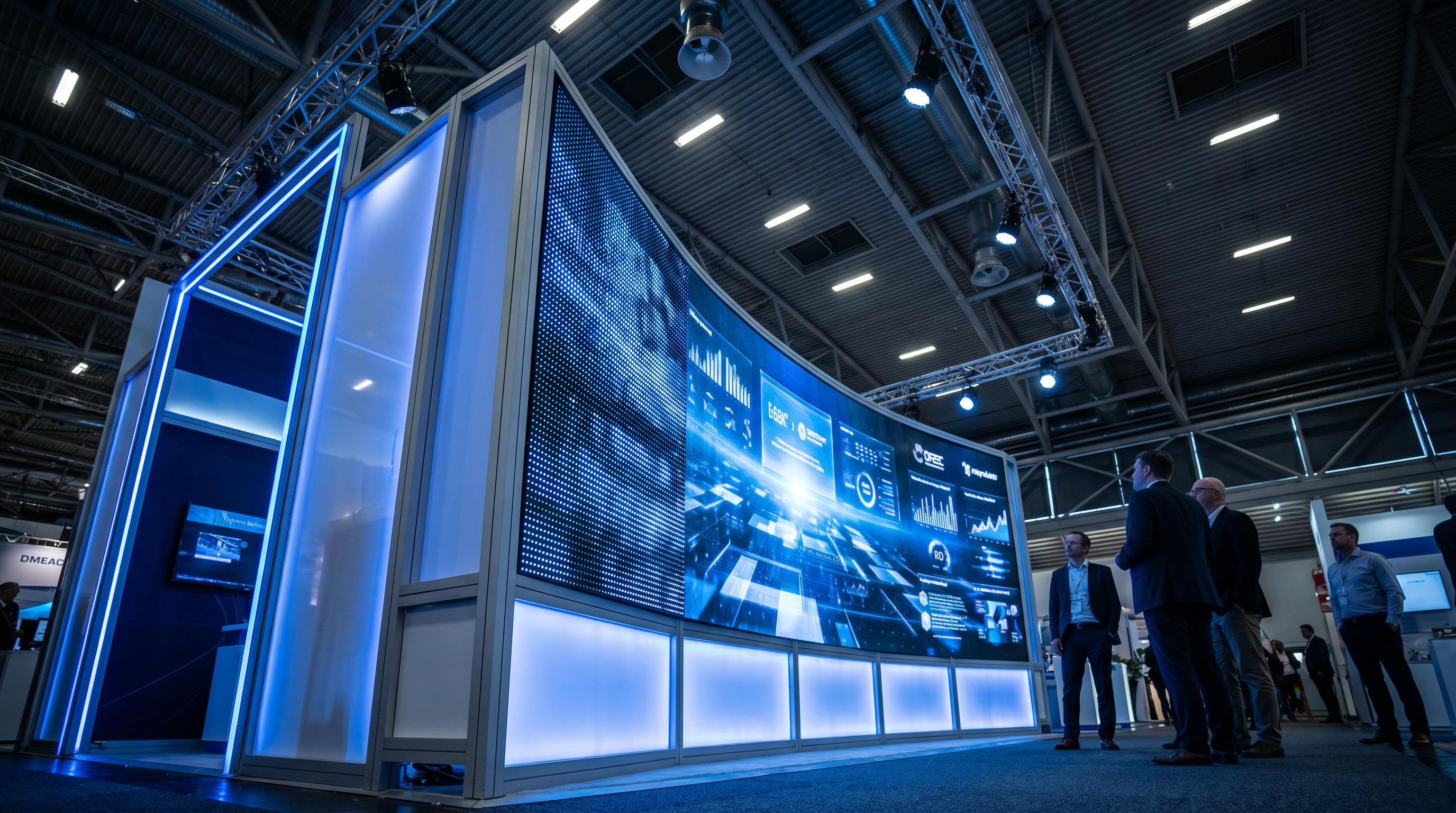
An LED video wall is a large-format display made up of individual LED panels tiled together to create a seamless, high-resolution screen. Unlike traditional projection or LCD displays, LED video walls produce their own light, delivering vivid colors and deep blacks that remain visible even under the harsh fluorescent lighting of convention centers. For trade show exhibitors, this means your exhibit content is always bright, sharp, and impossible to ignore from across the show floor.
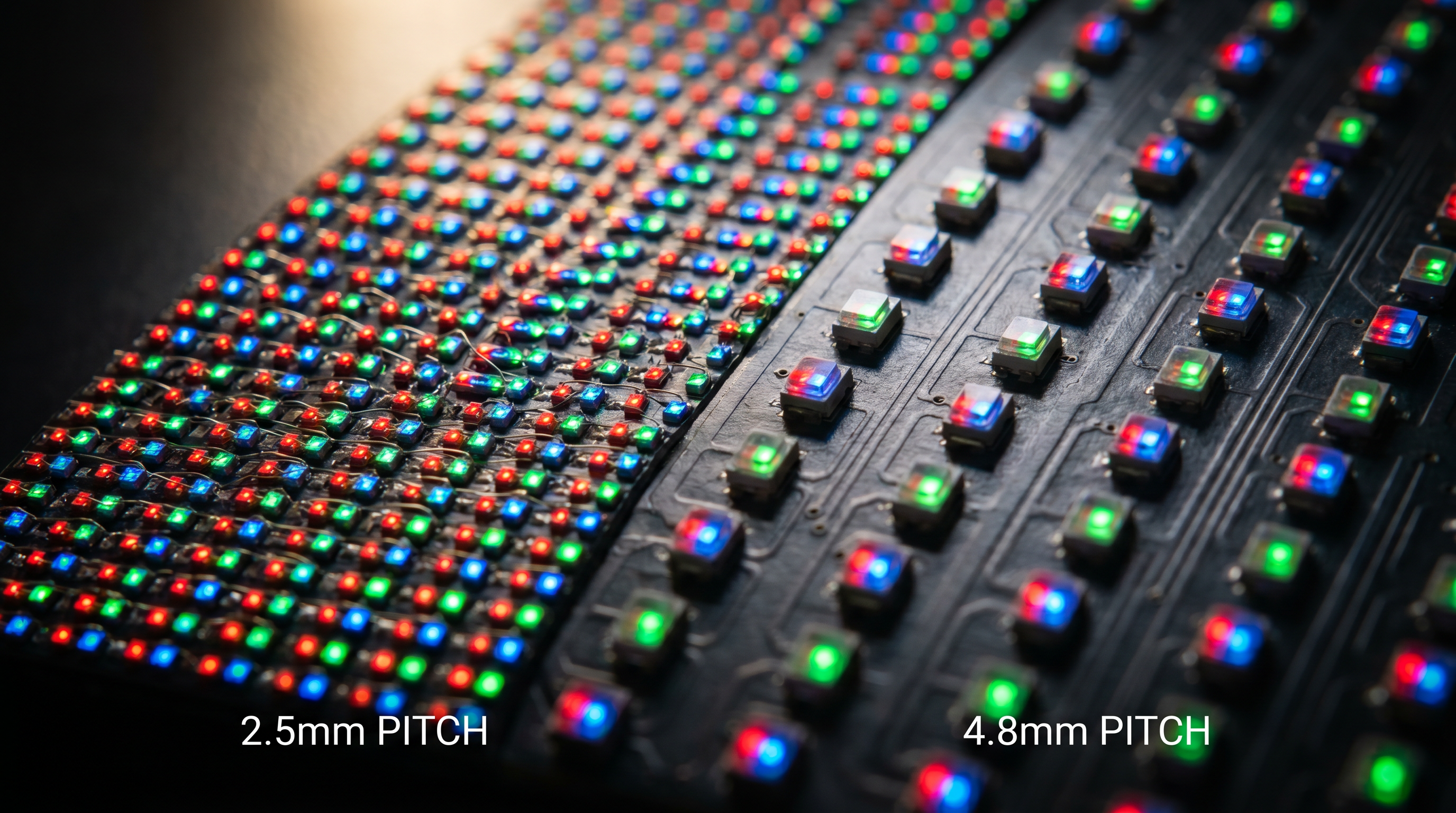
Modern LED panels use surface-mounted diode (SMD) technology, where tiny red, green, and blue LEDs are clustered together on a single chip. This allows for incredibly tight pixel pitches — the distance between each LED cluster — which directly impacts resolution. The closer the pixels, the sharper the image appears at close viewing distances.
How LED Video Walls Work at Trade Shows
Trade show LED walls are modular by design. Individual panels — typically 500mm x 500mm or 500mm x 1000mm — lock together using quick-connect hardware, allowing crews to build walls of virtually any size or shape. A standard 10x10 exhibit might feature a single 8-foot-wide wall, while a 40x40 island exhibit could incorporate L-shaped, curved, or even ceiling-mounted LED configurations.
Each panel connects to a video processor that maps your content across the entire wall. Whether you're displaying a single panoramic video, a multi-zone layout with live social feeds, or interactive touch-driven content, the processor handles the pixel mapping in real time. Most rental companies provide the processor, cabling, and a dedicated technician as part of the package.
Choosing the Right Pixel Pitch
Pixel pitch is the single most important specification when selecting an LED wall for your trade show exhibit. Measured in millimeters, it represents the center-to-center distance between adjacent pixels. Common trade show pixel pitches include P2.5 (2.5mm), P2.9 (2.9mm), P3.9 (3.9mm), and P4.8 (4.8mm).
The rule of thumb: multiply the pixel pitch by 8 to get the minimum comfortable viewing distance in feet. A P2.5 wall looks sharp from about 20 feet away, making it ideal for smaller exhibits where attendees stand close. A P3.9 wall is best viewed from 30+ feet, which works perfectly for large island exhibits where the wall serves as a backdrop visible from the aisle.
Smaller pixel pitch means more LEDs per square foot, which increases both resolution and cost. For most 20x20 and larger exhibits, P2.9 or P3.9 offers the best balance of visual quality and budget.
Content Design Best Practices
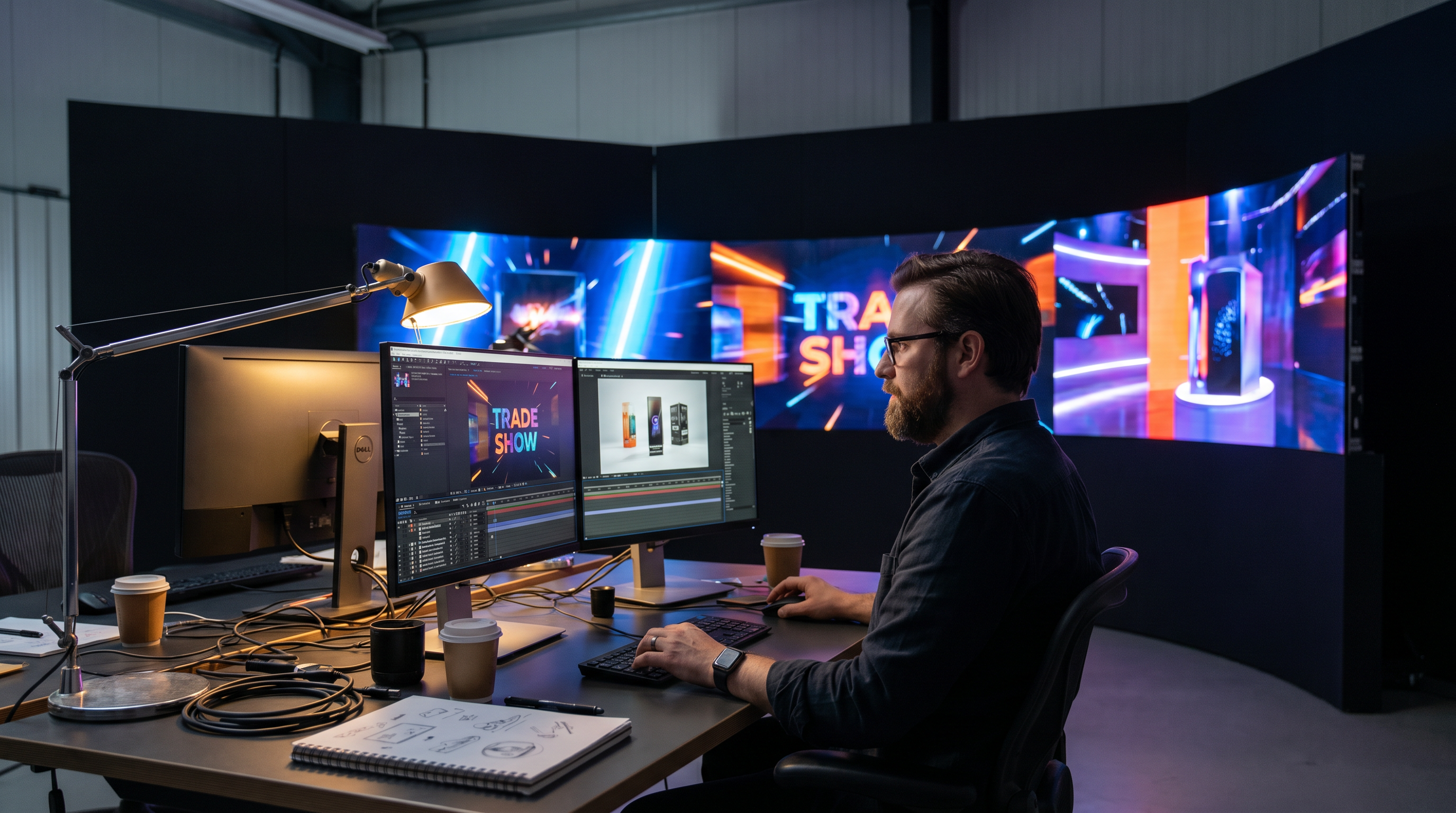
Your LED wall is only as effective as the content displayed on it. Static images waste the potential of a dynamic display. Instead, focus on motion graphics with smooth transitions, bold typography visible from 30+ feet, and high-contrast color palettes that pop under convention center lighting.
Design your content at the native resolution of your wall. If your wall is 16 feet wide by 9 feet tall using P2.9 panels, that's approximately 2,700 x 1,500 pixels. Upscaling lower-resolution content will result in visible pixelation. Work with your LED rental provider to confirm exact pixel dimensions before production.
Consider a content loop of 30-60 seconds that cycles through your key messages, product demos, and brand story. Include a clear call-to-action — whether that's visiting a demo station, scanning a QR code, or speaking with a representative.
Installation and Logistics
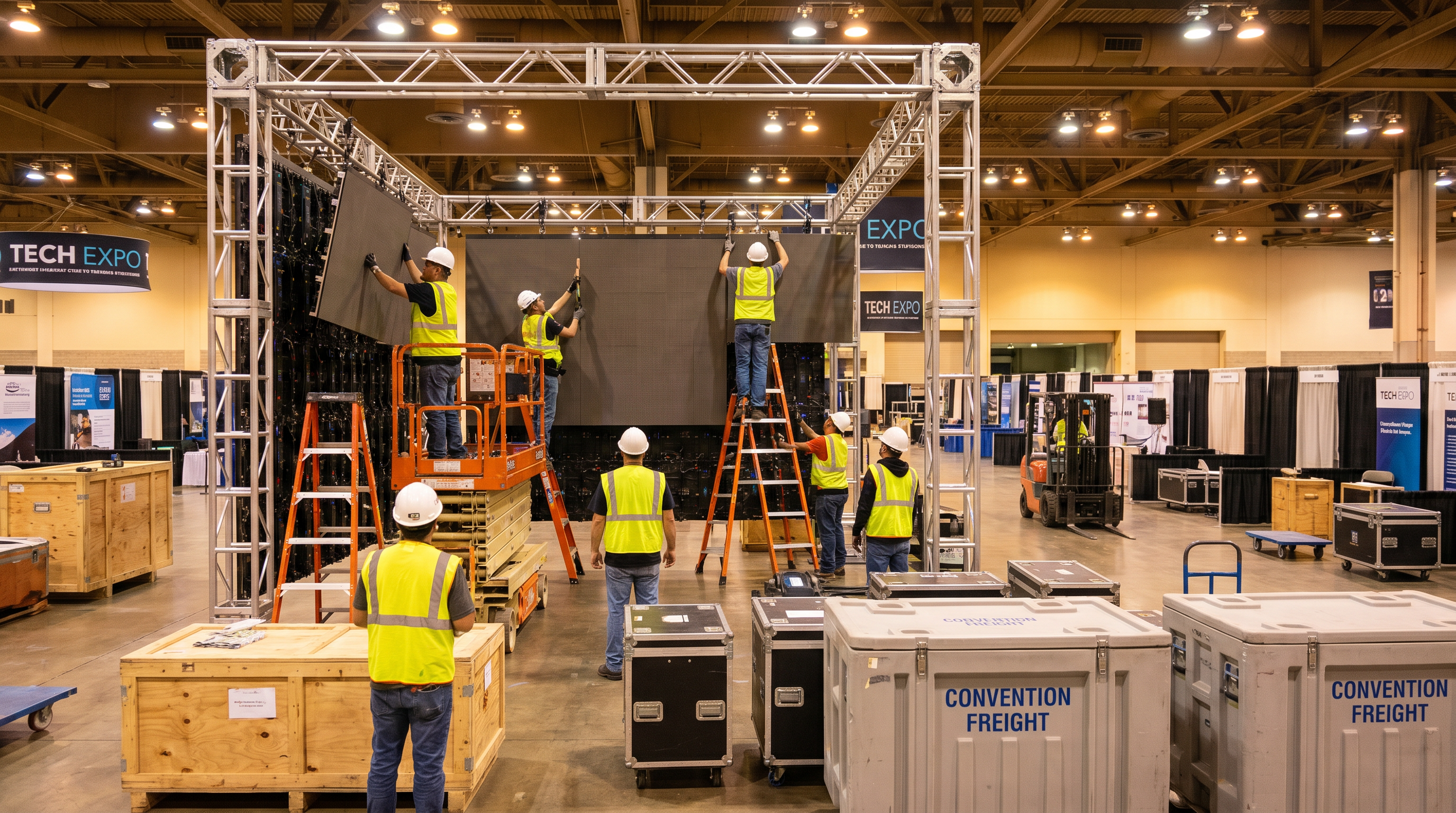
LED wall installation at trade shows typically requires 4-8 hours depending on wall size and complexity. Most rental companies handle the full install and dismantle (I&D) process, including rigging, cabling, content loading, and on-site testing. Plan for your LED wall to be one of the first elements installed and one of the last removed.
Weight is a key consideration. LED panels weigh 15-25 pounds each, and a 10x8 foot wall might use 32 panels — that's 500-800 pounds before the support structure. Ensure your exhibit design accounts for the structural requirements, especially if the wall is freestanding rather than mounted to truss or an exhibit frame.
Shipping typically involves custom road cases that protect the panels during transit. Your rental provider should coordinate shipping logistics, but confirm whether drayage (the cost of moving freight from the loading dock to your exhibit) is included in your quote.
Key Takeaways
- LED video walls use modular panels that tile together for any size or shape
- Pixel pitch determines resolution — P2.9 and P3.9 are most popular for trade shows
- Design content at native resolution with bold, high-contrast visuals
- Plan 4-8 hours for installation with professional I&D crews
- Always confirm drayage and shipping logistics in your rental quote
Frequently Asked Questions
How much does an LED video wall cost to rent for a trade show?
LED video wall rental costs typically range from $150-$400 per panel per day, depending on pixel pitch and event duration. A standard 10-foot wall might cost $3,000-$8,000 for a 3-day show including installation and support.
Can I use my own content on a rented LED wall?
Absolutely. Most rental providers accept content in standard video formats (MP4, MOV) at the wall's native resolution. Many also offer content creation services if you need help producing motion graphics.
How far in advance should I book an LED video wall?
We recommend booking 8-12 weeks before your show date, especially for major events like CES, NAB, or HIMSS where LED inventory is in high demand.
Written by Ryan Mitchell
Senior Trade Show Technology Consultant
Ryan Mitchell has over 12 years of experience in trade show exhibit design and LED display technology. He has managed LED installations at 200+ major conventions including CES, NAB, HIMSS, and SEMA.
Ready to Elevate Your Trade Show Presence?
Get a free, no-obligation quote for your next LED exhibit. Our team will help you choose the perfect configuration for your exhibit size and budget.